
Sunil Bharti Mittal, bottom, left, says he is fond of Bill Gates' famous quote: "Success is a lousy teacher." Back from a long foreign business trip, the founder-chairman of Bharti Enterprises talks to Malini Bhupta and Kiran Rathee about the challenges posed by Reliance Jio and how he is determined to come out on top once again. Mittal says , today, Airtel is as ready as Jio in pure-play 4G operations.

Agreement between Bharti Airtel and Loop Mobile, which offers mobile services in Mumbai, expired on October 31

Among other segments, home broadband subscriptions have picked up and the virtual private network service, too, increased by around 15 per cent.

'We showcased about 20 use cases in 5G trials in Pune and Gandhinagar and some of them were interesting and innovative.' 'However, which ones will take off and which ones would not be relevant, we don't know yet.'

Laying fibre to home is a cumbersome and a slow process as every building has to be physically wired.

According to telcos and analysts, this is due to SIM consolidation happening after the minimum recharge plans were implemented by incumbents.

The new offer is part of its strategy to turn India to an exclusively 4G market.

Consumers can expect a 5G launch in the country soon. Telecom companies (telcos) say if auctions take place on time - the target is July - they would be able to offer some services in a few cities by the end of this year and a full roll-out from 2023. But the question is: will 5G turn the tables for telcos financially? Will average revenue per user (ARPU) improve? Will mobile consumers upgrade to 5G quickly and pay more? Will the expanded functions that 5G enables drum up sufficient revenues? In simple terms, will telcos make more money?

A rare bonhomie among three private telecom companies in raising tariffs coming on the back of a bailout package by the government may have helped the telecom sector avert a crisis but the challenges haven't ceased to exist as the industry faces a cash-guzzling task of rolling out 5G networks in the coming months. The sector that provides direct and indirect employment to millions is projected to see Rs 1.3 lakh crore to Rs 2.3 lakh crore of investments in the coming years in creating robust infrastructure and building telecom and network products that have been incentivised by the government through PLI and other initiatives. After years of cut-throat competition and the apex court ruling on payment of past statutory dues left some players in the lurch, billionaire Sunil Mittal's Bharti Airtel and struggling Vodafone Idea almost in tandem raised tariffs, taking the plunge they had long been talking about.

Bulk of these customers use 2G phones and are still focused on voice services and might prove useful for both Bharti Airtel and the Idea-Vodafone combine.
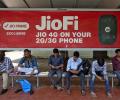
In the latest move, the telco has reduced validity for its Rs 309/509 packages from 84 days to 56

Vodafone Idea Ltd (VIL) CEO Ravinder Takkar did some plain speaking. In an analyst call after its quarterly results recently, Takkar said that the main stumbling block to raising fresh capital from investors is "pricing" - telecom tariffs, in other words. Nine months ago, the telecom company's board had cleared a proposal for raising Rs 25,000 crore from investors, after the promoters made it clear that they were not ready to pump in more money. But potential investors are concerned that without clarity on tariff hikes (there have been none for more than 18 months) they might just lose their money. The lack of visibility on raising tariffs has also impelled VIL to request the Department of Telecom (DoT) for a fresh reprieve by extending the two-year moratorium on paying its spectrum instalment of Rs 8,200 crore for another year till FY23.

India is today the second-largest telecom market in the world with over a billion customers and close to 600 million Internet users. New connections are available on the tap, calls are virtually free and it's hard to imagine anyone without a mobile phone today. Globally, there would be few parallels to this success story that truly democratised telephony and empowered a billion-plus people, observes Airtel's Sunil Bharti Mittal.

This is the last lot of payments that telcos will make towards deferred spectrum liabilities, as the Union Cabinet had late last year approved a two-year moratorium on such spectrum payment dues.
After Vodafone Idea, Tata Teleservices (Maharashtra) on Tuesday said it will opt for conversion of the interest amount on AGR dues into equity and post conversion, the government's holding in the company is expected to be around 9.5 per cent. The announcement of Tata Teleservices (Maharashtra) came within hours of Voda Idea also deciding to opt for converting the interest amount on AGR dues into government equity. In a filing to the BSE, Tata Teleservices (Maharashtra) said Net Present Value or NPV of interest is expected to be nearly Rs 850 crore as per the company's estimates, subject to confirmation by the Department of Telecom (DoT).

Experts say going ahead data price will fall further due to competition

Vodafone Idea (Vi) lost 12.4 million subscribers in the first quarter of FY22, the most since the fourth quarter of FY20, as the second wave of Covid hurt its operational and financial performance. Vi had managed to trim subscriber losses in the third and fourth quarters of FY21. However, it lost 12.4 million subscribers and its customer base shrunk to 255.4 million in the first quarter of FY22. Sequential fall in 4G users was modest, indicating that most of the loss was in the low-margin 2G segment.
Just a few weeks ago, Communications Minister Ashwini Vaishnaw did some tough talking with the senior managers of Bharat Sanchar Nigam Ltd, the ailing state-owned telecom service provider. The message was clear: They had to perform, quit by taking the voluntary retirement package or be compulsorily retired from service. The terse message from an otherwise polite and soft-spoken minister came just days after he announced a second and bigger package of Rs 1.64 trillion as part of a four-year turnaround plan for BSNL.

For years it has been evident that fibre and DTH would give tough competition to cable in India where regulatory overload has mutilated an already warped industry structure. OTT added fuel to the fire. From Rs 27,000 crore in 2010, cable's share of subscription revenues is now estimated at Rs 13,000 crore.

With Airtel and RCom already having launched their special offers for post-paid customers, and RJio around the corner, Vodafone makes its move with Red.
The Indian market is more in sync with mobile markets of advanced countries like the UK, Japan, and South Korea, where there are fewer players - three to four.

Country accounts for 38% of telco's global user base, 10% of total revenue

Akash Ambani's first big job as he takes over as chairman of Reliance Jio, the group's telecom arm, is a no-brainer - he has to get his company through the long-awaited 5G auctions that are a few weeks away. But his bigger job, analysts said, will be to lead the transformation of the telecom company into a tech giant, a process that is underway as it seeks to list in the US. Insiders said there has been plenty of debate within the company's top executives on the auction strategy.

The company is targeting 100 million subscribers in shortest possible time, RIL Chairman Mukesh Ambani said

RJio is targeting the existing base of high-value customers.

Jio's global partnerships took shape this year when Jio Platforms, a 100 per cent subsidiary of Reliance Jio which has invested in various digital platforms, was able to woo a bevy of marquee investors: Facebook, Google, Qualcomm, Intel, and a numerous PE funds.
'There is no doubt at all that Jio's disruption of the mobile broadband market was a turning point for India's digital economy.'
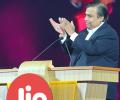
Analysts cautious on outlook, expect earnings to remain under pressure over medium term.

Three stockmarket experts give their best picks for the New Year.

The brand integration not only marks the completion of the largest telecom merger in the world, but will also set the company on its future journey to offer strong digital experiences to 1 billion Indians on its 4G network.

Its plans, to cut tariffs by 40% or offer more data, comes bundled with 1 GB high speed data for 28 days with unlimited voice thrown in.

The big advantage that Jio is able to garner currently is its low cost of operations.

The country's wireless subscriber base fell to 87.05 crore at the end of September, registering the first drop in five months, after Reliance Communications deactivated services of over 1 crore "unprofitable" users.

Jio's disruptive strategy, including free voice services and data at throwaway rates, apart from offering all services free for six months, triggered a consolidation in the telecom sector.

A daily ceiling of Rs 3 translates into maximum annual penalty of Rs 1,095 for every subscriber.

With over 40 million active subscribers (as of March 2013), DTH has grown tenfold from just 4 million customers six years ago.
 © 2026 Rediff.com - Advertise with us - Disclaimer - Privacy Policy - Sitemap - Feedback - About us - Terms of use - Grievances